Victorian jewelry at Lyppens
Victorian jewelry dates from the reign of Queen Victoria, from 1837 to 1901. During this period, a wide variety of designs emerged, ranging from romantic pieces with symbolic details to elaborate jewelry featuring natural diamonds and colored gemstones.
At Lyppens, you will find authentic Victorian jewelry within our vintage and antique collection. From rings and bracelets to necklaces and earrings, each piece reflects the design and craftsmanship of its time. Our specialists carefully assess the jewelry, considering factors such as craftsmanship, age, and condition.
The diversity of Victorian jewelry
The Victorian era spans more than sixty years, during which jewelry fashion changed considerably. As a result, there is no single style that defines Victorian jewelry.
During the earlier part of the period, romantic motifs and inspiration from nature played an important role. Later, mourning and remembrance jewelry became more prominent, along with the use of darker materials. Toward the end of the century, interest grew in lighter, more refined designs.
This evolution is reflected in the many types of jewelry produced during the era. From intricately detailed gold rings and richly decorated bracelets to elegant earrings and necklaces, designs varied according to the period, materials, and original purpose of each piece.
Symbolism and personal meaning
Many Victorian pieces were worn for more than their beauty alone. Jewelry could also express a personal message, such as love, affection, remembrance, or mourning.
Flowers, leaves, hearts, snakes, and other motifs sometimes carried symbolic meaning. Initials, inscriptions, and particular combinations of gemstones could also be chosen with intention.
Not every decorative detail necessarily has a hidden meaning. Nevertheless, symbolism remains a recognizable aspect of Victorian jewelry and can offer insight into the original purpose of a piece.
Victorian rings
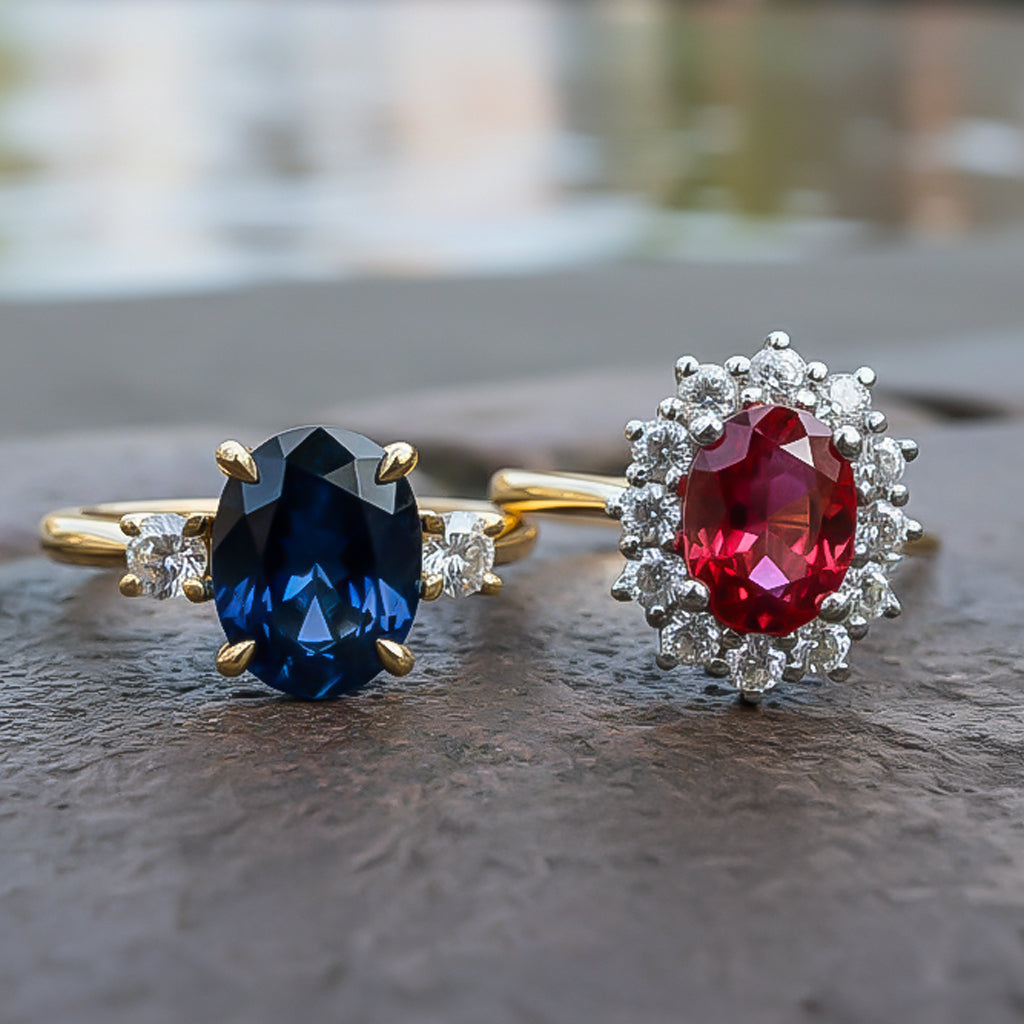
Victorian rings demonstrate just how varied jewelry designs could be during this period. Alongside relatively simple gold rings, jewelers also created pieces featuring multiple diamonds, colored gemstones, and intricate decorative details.
Cluster settings, rows of gemstones, and unusual combinations of stones appear in a variety of designs. Some rings have a distinctly romantic character, while others stand out for their symmetry and classic styling.
The condition of an authentic Victorian ring is particularly important. The band, settings, and gemstones are therefore carefully assessed, especially if the ring is intended for regular wear.
Victorian bracelets
Bracelets were an important part of Victorian jewelry fashion. Rigid bracelets, also known as bangles, are particularly characteristic of various designs from the second half of the 19th century.
These bracelets may be simple and understated or feature engravings, decorative patterns, diamonds, or colored gemstones. Some are richly detailed across the front, while others are decorated all the way around.
Within the vintage and antique collection at Lyppens, you will find original Victorian bangle bracelets, among other pieces. Available designs change over time, as every antique bracelet is an individual piece.
Victorian necklaces and pendants
Necklaces and pendants also hold a distinctive place in Victorian jewelry design. Styles range from delicate chains with subtle pendants to more elaborate necklaces featuring decorative elements and gemstones.
Pendants could take the form of flowers, lockets, or other meaningful motifs. Some pieces served a personal purpose, such as a locket designed to hold a portrait or another keepsake.
With antique necklaces, the connections, links, and clasps are just as interesting as the design itself. These components can provide clues about the original craftsmanship and are important when assessing the condition of a piece.
Victorian earrings
Victorian earrings come in a wide variety of shapes, from small, understated designs to longer dangling styles with greater movement and detail.
Diamonds, pearls, and colored gemstones may be combined with decorative gold elements. Floral motifs and other nature-inspired shapes also appear in Victorian earring designs.
With authentic antique earrings, the fastening mechanism deserves particular attention. Closures may have been modified over time to accommodate changing wearing habits. Such alterations do not necessarily detract from the jewelry, but they are relevant when assessing its original construction.
Natural diamonds and antique diamond cuts
Diamonds used in Victorian jewelry were cut by hand. Throughout the 19th century, diamond-cutting techniques continued to develop, resulting in a variety of antique diamond cuts.
Older pieces may feature cuts resembling the old mine cut, for example. Toward the end of the Victorian era, the old European cut also underwent further development.
These antique cuts have different facets and proportions from modern brilliant-cut diamonds. As a result, they display a distinctive play of light, and individual stones may differ visibly from one another.
Lyppens works exclusively with natural diamonds. This applies not only to Victorian jewelry but to all diamond jewelry in our collection and pieces created in our workshop.
Gold, silver, and colored gemstones
Victorian jewelry incorporated a variety of precious metals and materials. Yellow gold played an important role, while diamond jewelry also featured silver settings, sometimes combined with a gold structure.
Alongside diamonds, sapphires, rubies, emeralds, and pearls were among the gemstones used. Other natural materials also appeared, depending on the period and type of jewelry.
The combination of precious metal, gemstone, setting, and decorative finish can reveal a great deal about the craftsmanship of a Victorian piece. For this reason, antique jewelry is always assessed as a whole.
Restoring and preserving Victorian jewelry
An authentic Victorian piece has a long history behind it. Minor signs of wear and previous repairs may be part of that history. Not every irregularity needs to be removed, as it may contribute to the original character of the jewelry.
When wear affects the ability to wear a piece safely, restoration may be necessary. Examples include a weakened setting, damaged connection, worn clasp, or fragile earring fastening.
In the Lyppens workshop, antique jewelry can be examined and, where possible, carefully restored. Preserving original materials and details is the priority, and the appropriate work is assessed individually for each piece.
Recognizing and evaluating Victorian jewelry
A piece that looks Victorian does not necessarily date from the period between 1837 and 1901. Historical styles have frequently been revisited in later years.
When assessing authentic Victorian jewelry, we therefore examine several characteristics. Construction, materials, settings, gemstone cuts, clasps, any hallmarks, and evidence of hand craftsmanship can together provide clues about the age of a piece.
Later modifications are also taken into account. An antique necklace, for example, may have a replacement clasp, while the fastenings of a pair of earrings may have been altered at a later date.
Discover Victorian jewelry at Lyppens
The distinctive details of Victorian jewelry are often best appreciated when viewed up close. The goldwork, antique diamond cuts, decorative motifs, and construction give each piece its own individual appearance.
At Lyppens, you can explore our available Victorian rings, bracelets, necklaces, and earrings. Our specialists can tell you more about the craftsmanship, condition, and distinctive features of a particular piece.
Because these are authentic antique pieces, availability within the collection changes continuously.